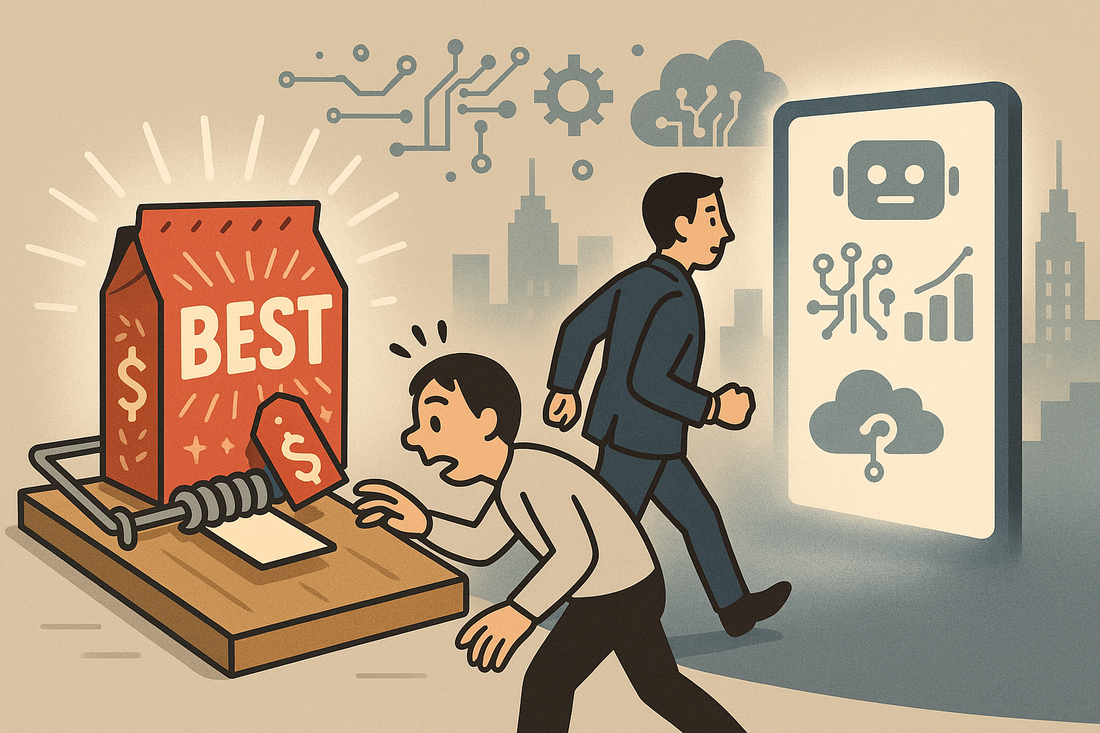
At the top of RMS (Rakuten Market's management screen), there was a video titled "How to create an entry product."
The key points of the video are:
1. Whether customers find it easy to purchase in terms of quantity, price range, service, and added value
2. From the store's perspective, is the product in demand? Will it lead to a next purchase? Is there enough stock?
That's what it was.
However, I have rarely seen a store that has created an entry-level product and then led to subsequent sales.
Basically, the only people who buy cheap things are those who want cheap things.
There are rare cases where it works well, but most of the time it's either pointless or counterproductive.
Last month, I conducted a customer analysis with a consulting client and found that customers who purchased the 1,000 yen entry product only bought that product, and the only customers who continued to purchase the regular product were those who had been buying the regular product from the beginning.
It was a long-established store that had been in business for nearly 20 years, but the data showed that with a 100% probability, those who purchased the entrance item did not purchase any other items.
Even though they were offering entry-level products even at the expense of their profits.
It is also true that customers who purchase lower-priced products often require more effort to deal with.
So I told them, "From now on, let's choose our customers."
This month, we boldly adopted this policy and discontinued the entry-level product that had been on sale for the past 20 years. As a result, sales increased and advertising effectiveness and profit margins improved significantly.
I find it truly unfortunate that illogical "common sense" such as "Let's first create an entry-level product" is being spoken of and people are coming to believe it.
It was exactly two years ago in June that I gave a seminar on logical thinking.
Now, two years later, I feel that the need to think logically is even greater than before.
Even though AI has emerged, people who lack logic will never be able to use it effectively.
When AI is used by people who tend to think and act on impulse, it will produce the expected "shallow results."
What's more, the person himself thinks he is thinking logically, so he doesn't realize this.
In this age of AI, the gap between those who can think logically and those who cannot is widening enormously.
Both the president and staff need to firmly develop the habit of "thinking logically" in their daily work.
To do this, it is most important to have a humble attitude and stop and think, "Is this really true?"
Companies with humble presidents and staff are the ones that really grow.
I myself would like to make sure to think humbly and make calm judgments, without making assumptions based on my own selfish preconceptions.
The trap of entry-level products: The conditions for companies to grow in the AI era